
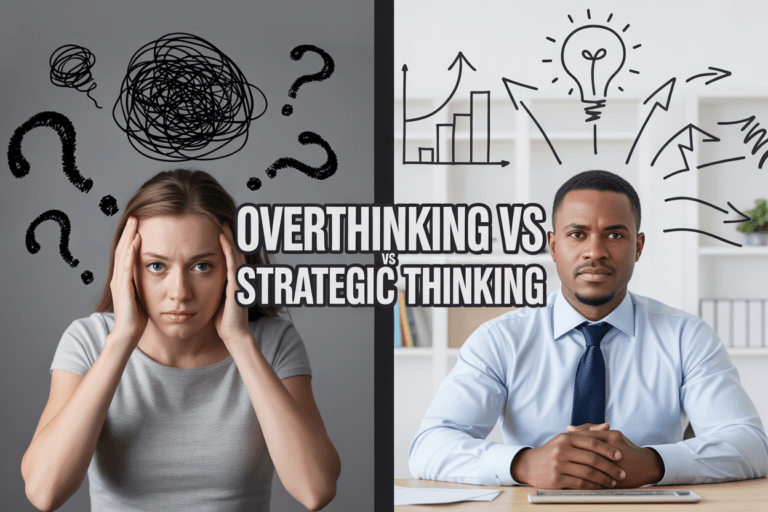

Your brain can be your greatest asset or your worst enemy when it comes to making decisions. Many people struggle with overthinking vs strategic thinking without realizing there’s a crucial difference between the two approaches.
This guide is for anyone who finds themselves stuck in endless mental loops, second-guessing every decision, or feeling mentally exhausted from too much analysis. If you’re a professional, student, or simply someone who wants clearer thinking and better decision-making skills, understanding these patterns can transform how you approach problems.
We’ll explore the core differences between overthinking and strategic thinking, including how to recognize when your thoughts have shifted from productive analysis into harmful rumination. You’ll learn to identify common overthinking patterns that keep you stuck and discover proven strategies to break free from overthinking cycles while building stronger strategic thinking skills. We’ll also cover when persistent overthinking might signal the need for professional support and how it impacts your mental health and relationships.
The goal isn’t to stop thinking deeply about important decisions. Instead, you’ll learn to channel your mental energy into productive analysis that leads to clear action rather than endless worry.
Understanding the Core Differences Between Overthinking and Strategic Thinking
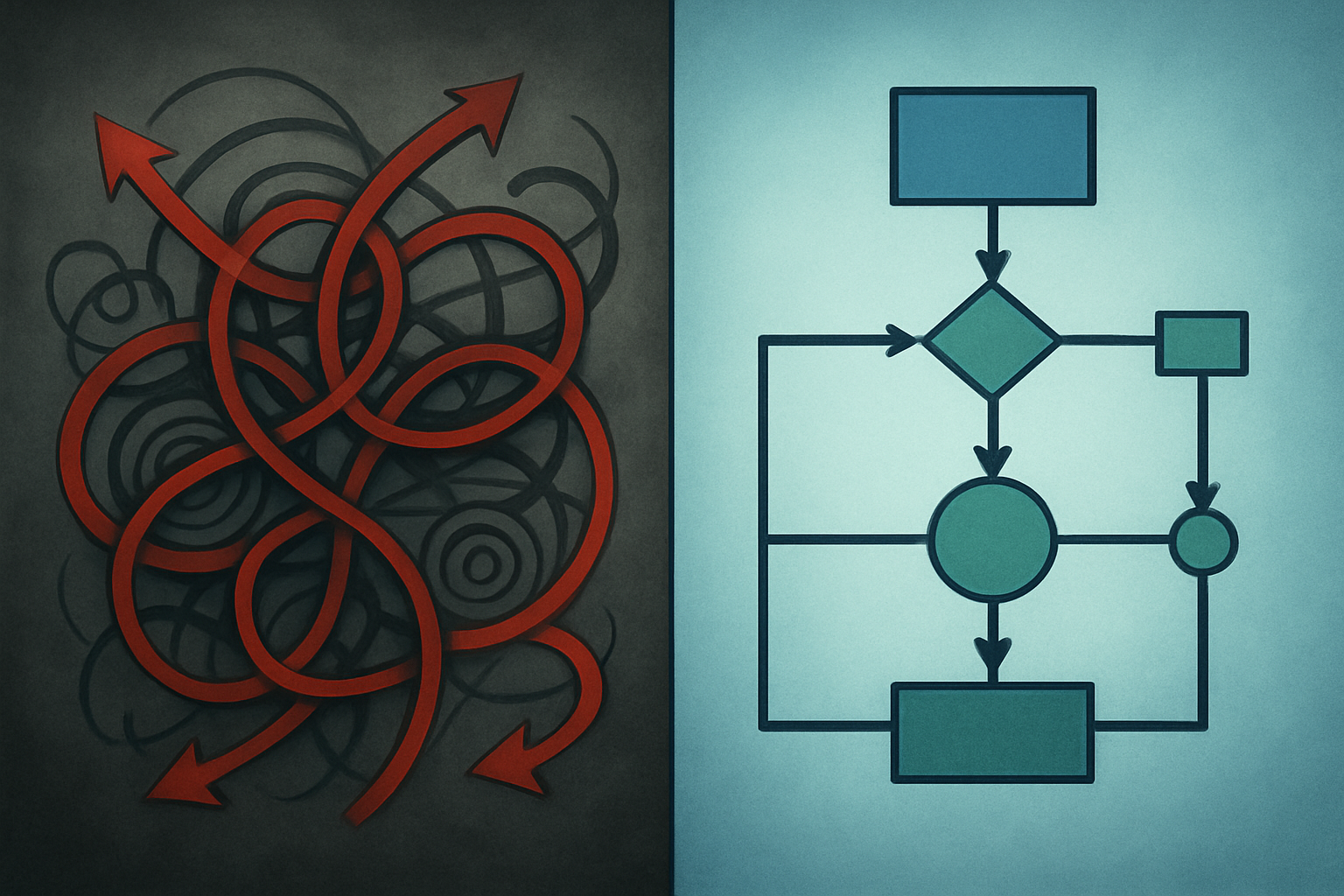
Recognizing overthinking as dwelling on problems without seeking solutions
Overthinking involves thinking about a topic excessively, analyzing it for long periods, and dwelling on problems without actively looking for solutions. This mental pattern traps you in cycles of worry and indecision, preventing productive action and forward momentum.
Identifying strategic thinking as solution-focused problem analysis
Strategic thinking contrasts sharply with overthinking by maintaining a solution-focused approach to problem analysis. Rather than getting stuck in endless loops of worry, strategic thinking leads to productive actions and clear decision-making frameworks that drive meaningful results.
Understanding when mental analysis becomes counterproductive
Mental analysis crosses into counterproductive territory when it fuels uncomfortable emotions and becomes linked to negative mental health outcomes. This shift typically occurs when thinking patterns contribute to depression, anxiety, and PTSD rather than generating actionable insights or solutions.
Warning Signs That You’ve Crossed Into Overthinking Territory

Inability to focus on anything else besides the problem
When overthinking takes hold, your mind becomes consumed by one particular thought or situation, making it impossible to concentrate on other tasks or responsibilities. This mental fixation prevents productive thinking and creates a cycle where the same concern dominates your cognitive bandwidth repeatedly.
Constant worry and mental exhaustion without progress
A clear sign of overthinking is feeling constantly worried, anxious, or mentally exhausted while making no actual progress toward resolving the issue. Unlike strategic thinking that moves you forward, overthinking drains your mental energy without producing actionable solutions or meaningful insights.
Replaying scenarios repeatedly in your mind
Overthinking manifests as endlessly replaying conversations, situations, or imagining negative scenarios in your mind. This repetitive mental rehearsal includes second-guessing decisions you’ve already made, leading to self-blame and mental torture. You may also experience difficulty shutting off your brain, especially when trying to sleep.
Common Overthinking Patterns That Block Clear Thinking

Catastrophizing and Imagining Worst-Case Scenarios
Catastrophizing involves imagining things are worse than they actually are, creating a distorted view of reality that blocks clear thinking. This overthinking pattern manifests when you transform minor setbacks into major disasters – for instance, fearing that a failed exam will inevitably lead to failing school entirely and never securing employment. This mental trap escalates everyday challenges into insurmountable crises, preventing rational assessment of actual risks and available solutions.
Overgeneralizing from Single Events to Future Expectations
Overgeneralizing represents another destructive overthinking pattern where you base future expectations entirely on a single past event. This cognitive distortion leads to rigid assumptions that certain outcomes will “always” or “never” happen, effectively limiting your ability to see new possibilities or adapt to changing circumstances. By extrapolating one experience across all future scenarios, overgeneralizing creates false certainties that obstruct strategic thinking and decision-making processes.
How Overthinking Damages Your Mental Health and Relationships

Contributing to depression, anxiety, and sleep problems
Overthinking significantly contributes to various mental health conditions, including depression, anxiety, generalized anxiety disorder (GAD), obsessive-compulsive disorder (OCD), panic disorder, PTSD, and social anxiety disorder (SAD). This persistent mental pattern also increases the risk of insomnia, interfering with both your ability to fall asleep and overall sleep quality.
Creating relationship conflicts through negative assumptions
The habit of overthinking damages relationships by leading to unnecessary arguments and conflicts. When you assume the worst and jump to incorrect conclusions about others’ intentions or behaviors, it creates tension and misunderstandings. This pattern can manifest as relationship anxiety, a constant need for reassurance from partners, or attempts to control others, ultimately harming your connections with loved ones.
Impairing decision-making abilities and productivity
Overthinking significantly impairs your decision-making abilities, making even simple choices feel overwhelming and leading to chronic indecision. This mental pattern prevents productive action and wastes valuable time without any meaningful progress, creating a cycle where analysis paralysis replaces effective problem-solving and strategic thinking.
Proven Strategies to Break Free From Overthinking Cycles

Using healthy distractions to reset your mental state
Engaging in healthy distractions, such as working in the garden, provides an effective way to reset your mental state when caught in overthinking cycles. These activities allow your brain to process information in the background while your conscious mind focuses elsewhere, often leading to clearer solutions and reduced mental tension.
Challenging negative thoughts with realistic perspectives
Breaking free from overthinking requires actively challenging negative thoughts by reminding yourself that thoughts are not facts. Question whether these thoughts are realistic and consider alternative scenarios that might be more accurate. This cognitive reframing helps interrupt destructive thought patterns and promotes more balanced thinking.
Developing self-acceptance and compassion
Self-acceptance and compassion form the foundation for overcoming overthinking patterns. Practice forgiving past mistakes, focus on self-appreciation, and cultivate gratitude for your progress. Building a strong support system reinforces these practices, while remembering that everyone is a work in progress helps maintain perspective during challenging moments.
Building Strategic Thinking Skills for Better Decision-Making

Strengthening interpersonal skills and self-awareness
Now that we understand overthinking patterns, developing strategic thinking requires cultivating stronger interpersonal skills. Increasing self-awareness helps recognize when you’re spiraling into unproductive thoughts, while boosting self-confidence enables decisive action. Practicing self-control prevents emotional reactions from derailing logical analysis, creating space for clear decision-making.
Setting clear boundaries and assertive communication
With enhanced self-awareness established, learning assertive communication becomes crucial for strategic thinking. Setting clear boundaries in interactions prevents external pressures from triggering overthinking cycles. Assertive communication ensures your needs are met while maintaining relationships, eliminating the mental loops that occur when expectations remain unclear or unaddressed.
Focusing on solution-oriented approaches to problems
Previously mentioned skills converge into solution-oriented thinking, the cornerstone of strategic decision-making. Rather than dwelling on problems indefinitely, strategic thinkers take necessary steps to resolve situations promptly. This approach transforms mental energy from circular rumination into productive action, breaking free from overthinking cycles while building confidence through tangible progress and measurable outcomes.
When to Seek Professional Help for Persistent Overthinking

Recognizing when overthinking affects daily functioning
Seek professional help if overthinking significantly impacts your mood, daily life, or if you find yourself unable to break free from persistent overthinking cycles that interfere with your normal functioning.
Understanding therapeutic approaches that can help
Mental health professionals can teach specialized skills to stop obsessing, ruminating, and dwelling on unhelpful thoughts. They can help identify effective coping strategies like mindfulness techniques or physical exercise that specifically target overthinking patterns and reduce their impact on your mental health.
Finding the right mental health support for your needs
Consult your healthcare provider for referrals to a qualified therapist who can provide targeted support for managing overthinking. Recognize that persistent overthinking can be a symptom of or increase susceptibility to mental health issues like depression or anxiety, making professional intervention crucial for long-term mental wellness.

The line between overthinking and strategic thinking isn’t always clear, but recognizing the difference can transform how you approach decisions and challenges. Strategic thinking leads to productive action and solutions, while overthinking traps you in cycles of worry and indecision that damage your mental health and relationships. By identifying warning signs like rumination, catastrophizing, and decision paralysis, you can catch yourself before falling into these unproductive patterns.
Breaking free from overthinking requires intentional effort and the right tools. Practice challenging negative thoughts, embrace healthy distractions like meditation, and focus on developing stronger interpersonal skills and self-acceptance. Remember, your thoughts are not facts, and dwelling on problems rarely leads to solutions. If persistent overthinking continues to interfere with your daily life or mood, seeking professional help can provide you with additional strategies and support to regain control of your mental space and build the strategic thinking skills that will serve you well in all areas of life.



Fundador Casino me da la sensación de estar en un casino real, pero desde la comodidad de mi casa. La selección de juegos es increíble. No dudes en visitar fundador casino, ¡te encantará!
Jiiliasia… Never heard of it! Gotta do some digging and see what the buzz is all about. If anyone’s tried it, let me know if its any good! Explore Jiiliasia: jiiliasia
JL6? Hmm, feels like a cool secret code. Hope it unleashes some great winnings! Wonder if they have live dealer games? Always a plus. Check it out at jl6